|
|
 |
|
|
|
| neueste Meldung in Musicainfo.blog |
 | | | |
|
|
 Fachbücher/Studienunterlagen Fachbücher/Studienunterlagen
| Titel |
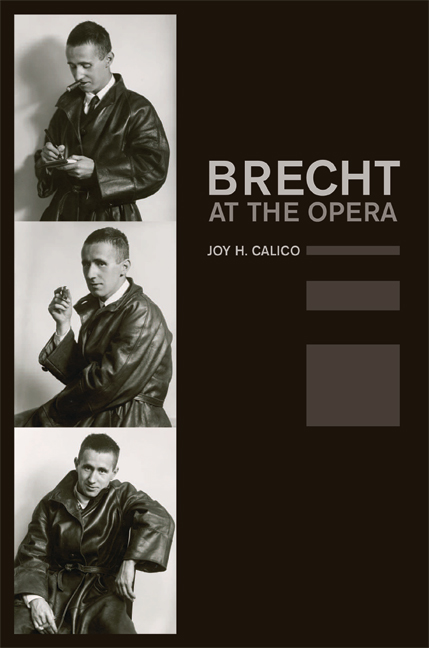
Brecht at the Opera |
| Artikel-Nr. |
97874731 |
| Unterkategorie |
Biographien |
| Textsprache |
Englisch {en} |
| Erscheinungsland |
USA (us) |
| Verlag * |
 hier klicken hier klicken |
| Serientitel |
California Studies in 20th-Century Music |
| Nr. in Serie |
9 |
| ISBN * |
hier klicken |
| Erscheinungsjahr |
2008 |
| Autor |
Calico, Joy H. |
| Zusatzinfo/Inhalt |
Brecht at the Opera befasst sich mit der lebenslangen ambivalenten Auseinandersetzung des deutschen Dramatikers mit der Oper. Ein begeisterter Opern-Liebhaber in seiner Jugend, denunzierte Bertolt Brecht das Genre später als dekadent und für die moderne Gesellschaft irrelevant, selbst dann als er weiter an Opern-Projekte während seiner gesamten Karriere arbeitete. Er machte drei Opern fertig und versuchte zwei Dutzend weitere mit Komponisten wie Kurt Weill, Paul Hindemith, Hanns Eisler und Paul Dessau. Joy H. Calico argumentiert, dass Brechts gleichzeitiges Arbeiten an Opern und Lehrstücke in den 1920er Jahren das neue Konzept der Zuschauer-Erfahrung erzeugte, das dann epische Theater definierte und dass seine Revisionen der Gestus-Theorie Mitte der 1930er Jahre an Opernaufführungs-Praktiken der Mimese des neunzehnten Jahrhundert erinnern.
Brecht at the Opera looks at the German playwright's lifelong ambivalent engagement with opera. An ardent opera lover in his youth, Bertolt Brecht later denounced the genre as decadent and irrelevant to modern society even as he continued to work on opera projects throughout his career. He completed three operas and attempted two dozen more with composers such as Kurt Weill, Paul Hindemith, Hanns Eisler, and Paul Dessau. Joy H. Calico argues that Brecht's simultaneous work on opera and Lehrstück in the 1920s generated the new concept of audience experience that would come to define epic theater, and that his revisions to the theory of Gestus in the mid-1930s are reminiscent of nineteenth-century opera performance practices of mimesis.
304 pages, 6 x 9 inches, 2 tables, 18 music examples
List of Illustrations
Acknowledgments
Introduction
1. Lehrstück, Opera, and the New Audience Contract of the Epic Theater
2. The Operatic Roots of Gestus in The Mother and Round Heads and Pointed Heads
3. Fragments of Opera in American Exile
4. Lucullus: Opera and National Identity
5. Brecht's Legacy for Opera: Estrangement and the Canon
Notes
Bibliography
Index |
| Externer Link * |
 hier klicken hier klicken |
| Lieferbar |
 ja ja |
* Felder mit einem Sternchen sind nur für Vereinsmitglieder nach Anmeldung ersichtlich.
|
|
|
|
|
|
|